“When I think of the Earth, I think about…”

By Elisabeth Lee When I think of the Earth, I think about how it is a home for so much life — plants, microbes, fungi, animals, and humans. Technological advances discovered by humans have given us the potential to discover more about our world and uncover its past. While humans are capable of so much positive change, we have the ability to cause so much damage as well. The effects of climate change are permeating into ecosystems, the atmosphere, and […]

Read more

BMSIS Scientist Feature: Dr. Zach Adam

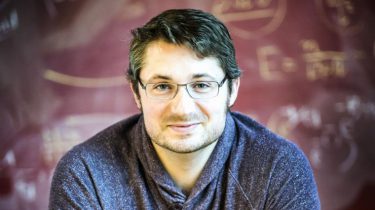
Dr. Zach Adam is interested in origins of life questions, with particular regard for the origin of eukaryotic life. He is currently a staff scientist at Lunar and Planetary Laboratory at the University of Arizona and a member of the Kacar Research Group, where he specializes in chemical and geological investigations of early life. He works mainly with Precambrian microfossils and conducts experiments with radiolysis reactions, which involve using alpha, beta, or gamma radiation to form complex molecules important for […]

Read more

BMSIS Scientist Feature: Dr. Betül Kaçar

Dr. Betül Kaçar uses a unique biochemical and phylogenetic approach to study questions about the origins of life. She and her team at the University of Arizona use phylogenetic tree algorithms to infer the ancestral sequences of modern genes. They focus particularly on the genes of essential enzymes that are common across the domains of life. Once derived, they synthesize these hypothesized ancient genes and insert them in modern bacteria to observe how the ancient forms of enzymes affect the […]

Read more

A little poetry and prose from the Blue Marble Space family

“Poetry is the journal of the sea animal living on land, wanting to fly in the air. Poetry is a search for syllables to shoot at the barriers of the unknown and the unknowable. Poetry is a phantom script telling how rainbows are made and why they go away.” — Carl Sandburg, from The Atlantic, March 1923.  We are certainly in trying times. With the current global pandemic of COVID-19 disease driven by the SARS-CoV-2 virus, we can all use a little […]

Read more

Announcing the Biennial European Astrobiology Conference (BEACON)

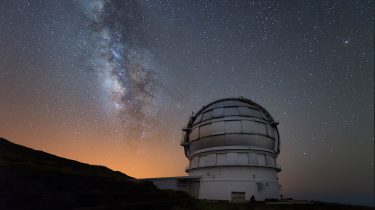
Our friends at the European Astrobiology Institute have announced the first Biennial European Astrobiology Conference (BEACON)! The conference will take place on La Palma Island, in the Canaries, Spain, from 20 through 24 April 2020. Registration, abstract submission, and accommodation booking are now open for this meeting. It will take place at La Palma & Teneguia Princess Hotel on La Palma Island. The scientific sessions are currently planned to cover the following themes: Formation and Evolution of Planetary Systems and Detection […]

Read more

Dinosaurs in The Delta Quadrant?

Star Trek: Voyager, Science, and Catholicism Guest post by Rebecca Salcedo, one of our current Young Scientist Program (YSP) participants. Rebecca has an undergraduate degree in molecular environmental biology from UC Berkeley and is currently a Masters student in microbiology at San Francisco State University. She’s a current BMSIS YSP at NASA Ames where she’s working with Dr. Alfonso Davila and Dr. Paul Wilburn on a project considering how life could develop and thrive on Mars by studying microbes from the […]

Read more

RED’ 2019 Astrobiology School Experience

Guest post by Sneha Shirsat, one of our past Young Scientist Program (YSP) participants. This past summer, Sneha took part in the 2019 class of Rencontres Exobiolgiques pour Doctorants (RED’ 2019) at the Réserve Ornithologique du Teich in France! The program offers a weeklong course of training in astrobiology, through lectures, projects, and hands-on training. After a long hiatus from my astrobiology rendezvous in 2015 as part of the Blue Marble Space Institute of Science Young Scientist Program, I ventured […]

Read more

BMSIS Monthly: The Detectability of Future Earth

BMSIS Monthly – March 2019 Every month, the scientists of Blue Marble Space Institute of Science meet to discuss their research, work in science communication, upcoming conferences and events, and more. The Meeting for March 2019 included a conversation about the recent issue of the journal Futures that focused on the detectability of our future Earth. Our monthly meeting for March of 2019 included a conversation about the works recently published in a special edition of the journal Futures that […]

Read more

AstroBioCon – Pune, India, 15-16 December!

BMSIS is proud to be a co-sponsor of the upcoming International Conference on Astrobiology (AstroBioCon) in Pune, India, December 15th through 16th, 2018. This two day conference will be a platform for interaction between international speakers, researchers, and academics working in astrobiology. Conference sessions and themes will include general astrobiology, astrochemistry, astrobiology education and outreach, extreme environments, and astrophysical research. The final session of the conference will focus on the development of an Astrobiology India Road Map. Interested individuals can […]

Read more

The First Course in Astrobiology at Modern College in Pune, India

BMSIS Scientist Dr. Parag Vaishampayan recently coordinated with Dr. Rebecca Thombre of Modern College of Arts, Science and Commerce in Pune, India, to offer the college’s first certificate course in astrobiology. Ten students from the college took this initial course offering, studying topics related to the origin of life, evolution, space exploration, planetary protection, and the quest to find habitable worlds beyond the Earth. Over 15 days, the students considered the history of Indian space exploration, endeavors in the science […]

Read more
1 11 12 13 14